Build It and They Will Come and Come and Come

Coastal Review Online

07.27.2012

Build It and They Will Come and Come and Come

Topics: Coastal management, Northeast Coast, Transportation

By Catherine Kozak

Traffic can get heavy in the summer along the 11-mile section of beach leading to Carova. Some wonder what it would be like if a new bridge is built over Currituck Sound.

CAROVA — At 6 a.m. on a July day last year, volunteers posted themselves near the entrance to the unpaved area on the northern tip of the Currituck County Outer Banks and started counting.

There were vehicles with North Carolina tags. Vehicles with Virginia tags. Open “cattle trucks” with groups of tourists. Rented Jeeps. Guided tour vehicles.

All day and into the night, they kept coming. By 8:30 p.m., the numbers were impressive: A total of 1,136 vehicles —207 of them related to tours — holding 3,663 people. All driving along 11 miles of sand road in Carova.

“Can you imagine the impact that the Mid-Currituck Bridge would have on these numbers?” Lynne Wilson, a Carova resident, said in an e-mail. “The safety of beachgoers is threatened now and will be disproportionately threatened if bridge traffic turns north, which of course, it will.”

As the state approaches the final step in the planning process to build the seven-mile toll bridge from mainland Currituck County to Corolla, many residents of Corolla and the unincorporated off-road community, where 136 wild horses famously roam, are cringing at the prospect that it may actually happen.

“It’s going to bring significantly more people,” said John Grattan, a semi-retired environmental attorney who lives in Corolla.

And when the weather makes beach-going impossible, he said, all those vacationers, en masse, will head south. “Once they’re here, the first rainy Thursday is going to be the biggest nightmare you ever saw.”

The preferred route has the bridge anchored off U.S. 158 north of Aydlett and landing between the Corolla Bay and Monteray Shores subdivisions, at least 300 feet from houses and lots on N.C. 12. Source: N.C. Department of Transportation.

At the same time, the $660 million project, which was first proposed about 20 years ago, is strongly favored by Currituck and Dare counties and the towns of Kitty Hawk, Southern Shores and Duck, which have suffered through hours-long traffic backups on U.S. 158 and N.C. 12 every summer for years. At the height of the season, it can take four hours on a Saturday to reach Corolla from Moyock, normally 1.5-hour trip.

The bridge would shave about an hour off the drive from Virginia and decrease the volume of heavy traffic. Proponents also say the bridge would make hurricane evacuation time faster, increase employment opportunities on both sides of the bridge and decrease commuting time for seasonal workers.

“There is a congestion problem, I agree, on certain weekends,” Grattan said. “But the proposed bridge solution is a ridiculously expensive and environmentally damaging option (that’s) solving the congestion problem at the expense of Corolla.”

In the project’s final environmental impact statement released in January, the preferred alternative has the bridge anchored off U.S. 158 north of Aydlett and landing between the Corolla Bay and Monteray Shores subdivisions, at least 300 feet from houses and lots on N.C. 12.

In just a short drive to the north, the asphalt ends and the land of wild horses and beach driving begins.

Wilson said that tourism promotion of the off-road beaches, featuring photographs of the wild horses on the edge of the surf, has been wildly successful. “The results are evident,” she said. “Tourists are flocking to Currituck’s off-road beaches. And the outcome might very well be self-defeating: overcrowding and unsafe beaches are not a destination of choice.”

As the numbers of day-trippers have increased, so has development. But many of the 180 or so year-round residents in Carova are concerned that infrastructure is already being strained, and it’s only 20 percent built-out. There are no restaurants, bathrooms or gas stations. The only public parking is on the beach, where trucks bounce along just a few feet from sunbathers. Sometimes, wild horses join the fray, strolling down to the water to cool off.

“Each year, more and more traffic comes up here,” said Jerry Gillet, the secretary of the Carova Beach Volunteer Fire Department. “Sometimes the beach is very, very difficult to negotiate because of the traffic and the horse tours. Sometimes we have a hard time negotiating our emergency vehicles.”

Driving to Carova is tricky.

Driving in sand is tricky, and often day visitors are inexperienced. Consequently, they don’t let the air out of their tires, causing their vehicles to get stuck or their tires to spin, leaving behind ruts.

“When you multiply that by hundreds of vehicles over 11 miles, it creates a washboard effect,” said J.P. Peron, owner of The Outer Banks Real Estate Co. in Carova.

Peron, a member of the volunteer fire department, said that the department analyzed their calls between 2000 and 2010 and found that five times more calls were responding to vehicle fires — caused by people overheating their transmissions while trying to get unstuck — than house fires.

Until about 2005, Carova was truly remote and isolated. Gillet said that for years after moving to the community in 1998, his North Swan Beach house was the only one within a quarter-mile in either direction.

“When the building boom happened,” he said, “I’m guessing in the general vicinity, there must have been 30 houses put up.”

Originally, in the late 1970s, the area was platted for commercial use, with developers counting on a highway being built from Sandbridge, Va, said Ben Woody, Currituck County planning director. But in subsequent years, part of the land was acquired for False Cape State Park. Then the federal government designated the entire off-road area as a COBRA zone, precluding the purchase of federal flood insurance and restricting certain infrastructure.

“When they platted it, I don’t think they intended there would be no roads there,” Woody said.

Currituck County later zoned Carova — the name blends Carolina and Virginia — as single-family residential with a minimum lot size of three acres.

The wild horses of the northern Outer Banks compete with SUVs on the beach.

The developer of a proposed 37-acre commercial development in Swan Beach, the northern-most subdivision, sued Currituck County in early July over the county’s rejection of a request for a conditional zoning change from residential to commercial. The proposal includes plans for an inn with 32 suites, a fishing pier, retail shops and restaurants.

Woody said that, as of 2011, a total of 3,150 lots were platted in the 12,000-acre off-road area. Of them, 665 have been permitted, and 2,526 are vacant lots. And many of those were grandfathered when the current three-acre zoning was implemented.

“We have thousands of one-third- and half-acre lots that can be built upon,” he said.

There are no restrictions on the number of bedrooms in a house, he said, as long as the parcel is big enough to provide septic. So far, the largest house in Carova is 23 bedrooms, and there are numerous houses with 10 to 18 bedrooms.

Yet, with no central water or wastewater system in Carova — it’s all wells and septic tanks — and a high water table, Woody said, there are legitimate concerns about how much capacity remains for growth.

A Beach Driving committee last year recommended that the county hire a consultant to conduct a study on establishing a permit system for off-road vehicles. It also recommended that numerous improvements be provided, including educational signs, a bathhouse, air stations and better ramp maintenance. Some recommendations have been implemented, but the permit system is not one of them.

Currituck County recognizes the value of an infrastructure study in Carova to determine what must be addressed as the community continues to accommodate more visitors and more development, Woody said. But so far, he agreed that issues have mostly been dealt with in a piecemeal, as- needed, basis.

“We haven’t stepped back,” he said, “and really looked at that area comprehensively to project into the future the need for planning.”

If the Mid-Currituck Bridge is built, whether more people come or not, Carova will become more accessible.

But the bridge is not necessarily a done deal. In addition to stiff opposition from a substantial number of northern beach residents, the bridge is vulnerable to cuts in the state budget and to lawsuits. Although the project would be partially funded by user tolls, it is also dependent on millions of tax dollars toward payments on revenue bonds.

So-called “gap funding” appropriations for the bridge and another toll project in Gaston County were cut from this year’s budget because they were not expected to be needed until June 30, 2013, said Greer Beaty, a state Department of Transportation spokeswoman.

The Currituck project’s record of decision, the last step required before construction can begin, is expected any time now, Beaty said. After that issued, those objecting to the project have 180 days to file a lawsuit.

Barring legal action, Beaty said that DOT has “other resources that we can and will use” to move the project forward if the $28 million in gap funding is not restored.

Bridge opponent Jen Symonds, an Aydlett resident and a founder of No Mid-Currituck Bridge, however, said she believes the Currituck bridge may be doomed by a combined loss of political support and lack of money. It’s difficult to defend, she said, spending $660 million — and charging a $28 toll each way — to save tourists an hour of driving about 26 days a year.

“My understanding is that the GOP leadership does not think this is a viable project,” Symonds said. “I don’t think it’s going to get the funding. I think the days of mega-projects for powerful politicians are gone. The state can’t afford it.”


Pending NC Toll Road Projects Less A Sure Thing

Pending NC toll road projects less a sure thing
By GARY D. ROBERTSON – Associated Press
By GARY D. ROBERTSON
Tags: NC Capitol Letter

RALEIGH, N.C. — An unusual probe by North Carolina Republican legislators into edited state Department of Transportation letters on funding for two divisive toll projects raised howls among Democrats who believed it was designed to embarrass Gov. Beverly Perdue.

“It’s a tempest in a teapot,” said Sen. Dan Blue, D-Wake, a former House speaker who couldn’t recall hearing before the kind of grilling DOT workers received from the Senate Rules Committee in the final days of the session that ended this month. “It’s much ado about nothing, and it’s all political posturing.”

Republicans defended their investigation as neither about politics nor the merits of the Garden Parkway and Mid-Currituck Bridge projects – but rather ensuring that lawmakers get factual information from state officials.

However, the investigation raised more questions about if or when shovels of dirt will be turned over for the bridge and parkway construction, which was mandated by the Legislature when it was in Democratic hands. A new crop of elected GOP lawmakers in the majority have questioned the efficacy of going through with the projects, giving hope to project opponents.

“I think they will expose some of the reasoning for this road,” said Marion Beach, 69, of Belmont. He and his wife’s home sits in what would be the westbound lanes of the current preferred route for the Garden Parkway. “I don’t see a benefit for Gaston County. I was opposed to the road long before it coming through my property.”

The proposed 7-mile bridge connecting mainland Currituck County with the northern Outer Banks and 22-mile parkway linking Gaston and Mecklenburg counties could cost $1.5 billion combined. Tens of millions of tax dollars will be paid annually to help pay a portion of expected revenue bonds that tolls won’t meet.

The state Department of Transportation and the North Carolina Turnpike Authority, which was formed 10 years ago to develop, build and operate toll projects, said the Perdue administration is committed to seeing these projects built. But Perdue leaves office in January. The projects currently are on track for completion in 2016 – unless potential environmental litigation delays them as it has with another toll project in Union County.

The Senate committee’s investigation into the letters shined the spotlight on the two projects and the $63 million combined that legislators have pledged to give annually as “gap funding” for the incurred debt.

Letters purported to be signed by DOT chief operating officer Jim Trogdon appeared to have reversed his earlier suggestion that the gap funding wasn’t needed this coming year. It turned out that two Perdue aides changed Trogdon’s draft of the letters and sent them to key legislators – affixed with his digital signature – without his express approval.

Trogdon disavowed the letters within hours of their release June 14. The enacted state budget still delayed the gap funding for another year. The governor’s aides attributed the letter changes to sloppy editing completed in a rush to affirm Perdue’s commitment to the projects. But the Republican majority on the Rules Committee wasn’t convinced and sent the findings to the State Ethics Commission for review.

Sen. Stan White, D-Dare, who spent his first full term in the Legislature trying to preserve the Mid-Currituck project, said the flap can only hurt a project that’s been discussed for 20 years. White’s predecessor, Senate leader Marc Basnight, D-Dare, was a powerful champion for the span.

White said the Mid-Currituck Bridge would reduce hurricane evacuation times and increase employment for northeastern North Carolina residents on the northern Outer Banks by making it easier to commute to work in places such as Corolla by bypassing Dare County.
“On a given Saturday or Sunday at this time of year, what normally would take 45 minutes is a four-hour drive,” he said.

But opponents said the project would only encourage more population in a region known for its seclusion and could actually make it more difficult to evacuate people. Improving existing roads near and on the Outer Banks is a better alternative, said David Farren, a senior attorney at the Southern Environmental Law Center.

“The obvious purpose of this project is to promote massive development on a fragile, shifting barrier island,” said Farren, whose group successfully sued the state to delay the Monroe Bypass toll project. Now the group is weighing whether to sue over the Garden Parkway by September on similar environmental grounds.

Opponents of the Garden Parkway said well-connected residents in the region – including former legislators – stand to win financially if the road is built because their companies own property near the proposed route.

Freshman Sen. Bill Rabon, R-Brunswick, co-chairman of the Senate transportation budget subcommittee, said he wants to see the Legislature repeal its requirement that the Mid-Currituck Bridge and Garden Parkway be built. The projects should then be evaluated by DOT using the same measures as other road-building initiatives to minimize political considerations.

“If they are good projects and if we should invest in those projects, then they will rise and you can address them by whatever means we need,” Rabon said.

First-term Sen. Kathy Harrington, R-Gaston, another transportation budget-writer, opposes the parkway. A GOP primary runoff this week for a Gaston County House seat also could result in ensuring another parkway opponent joins the Legislature.

Transportation Secretary Gene Conti said last week his agency is focused on carrying out projects directed by the Legislature – for example, the Garden Parkway – in a way that makes fiscal sense.

“If the Legislature decides that we shouldn’t do it, that’s a whole different story,” Conti said.

 Read more here: http://www.newsobserver.com/2012/07/15/2199946/pending-nc-toll-road-projects.html#storylink=cpy

Pare Down The DOT’s Project List

Modified Thu, Jun 28, 2012 04:05 AM

 Article By David Farren

The News and Observer

Tags: highway projects | General Assembly | Beverly Perdue

 Last week, reports in The N&O chronicled the theatrics over an altered letter to legislators using the borrowed electronic signature of the Department of Transportation’s chief operating officer. Dubbed by some “letter-gate,” the effort was a last-minute attempt to restore funding for two controversial proposed toll highways in next year’s budget. What is euphemistically being referred to as an “editing suggestion” from the Governor’s Office actually reversed DOT’s informed recommendation to spend the money on other pressing needs.

 The whole episode would be mildly amusing if it were only an isolated example, rather than the tip of the iceberg.

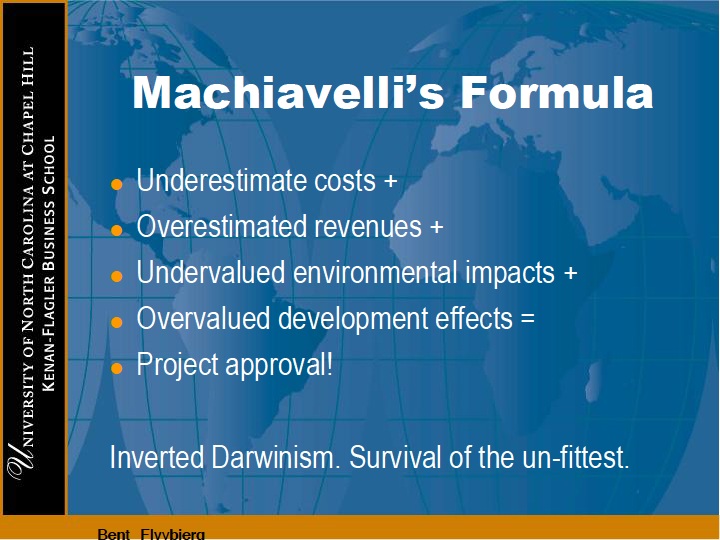
 The temptation for pork barrel projects is understandably great. Last year, the DOT spent $5.4 billion, well over a quarter of the state’s total budget of $19.7 billion. The long-term payoff can be huge for those who happen to buy real estate in the “path of progress” that they help steer. For the two mega-projects at the center of the recent shenanigans, the Garden Parkway and Mid-Currituck Bridge, the personal financial interests of the legislators, other public officials and well-connected land speculators have been well documented.

 So, where are we with the much ballyhooed DOT reform effort spanning the last two administrations? My simple thesis is that the ultimate measure of DOT reform is whether the projects that serve our most pressing transportation needs are the ones actually being funded. By that benchmark, the new ethics rules and structural reforms of recent years have yet to succeed.

 Later this summer, the DOT board will vote to adopt North Carolina’s next long-range transportation plan to guide $60-$120 billion in spending through 2040. Unfortunately, there are many examples of questionable, politically influenced projects still on the list DOT formulated decades ago.

 Let’s start with the two in the spotlight last week, remembering that they have only been delayed one year so far. A delay means taxpayers still face hundreds of millions in state subsidies over 30 years because the toll revenues are expected to fall far short of the construction costs:

 •  The $1 billion Garden Parkway would be a new 22-mile-long southern bypass of Gastonia, with the goal to relieve traffic on Interstate 85. DOT’s own study refutes this notion and also concludes that the southerly route of the project would result in a net job loss to South Carolina.

 •  The $600 million Mid-Currituck Bridge across Currituck Sound near Corolla would spur development of vacation homes, mostly for out-of-state visitors, on a fragile, receding barrier island now home to only a handful of North Carolina residents.

 Here are some more of the pet projects on DOT’s highway build-out map:

•  $400 million for the initial phase of the $1 billion “Corridor K” bypass and tunnel project through the remote Snowbird Mountains. Project proponents have yet to substantiate a transportation purpose to justify the massive investment and environmental destruction.

 •  $1 billion in combined bypass projects along U.S. 70 in Eastern North Carolina. The main purpose is to prop up a port in Morehead City that is ill-suited to compete in the global economy.

 •  $600 million to add a section Interstate 74 across the Green Swamp in Brunswick County, a nationally significant biological “hot spot.” North Carolina and private groups have already invested millions in preserving this little-trafficked area for hunting and conservation.

 •  And then there’s the $700 million Monroe Connector/Bypass toll highway east of Charlotte, where the U.S. 4th Circuit Court of Appeals recently ruled that the DOT misled the public and permitting agencies by downplaying its impacts and ignoring more cost-effective alternatives. The “redo” of the environmental study will allow reconsideration of DOT’s own estimate that the existing corridor could be upgraded for only $15 million.

 In all, the proposed Long Range Transportation Plan has about $15 billion in these and other “legacy projects” being kept alive by the same kind of political pressure we all witnessed last week. These expensive proposals have never been evaluated through a public process to determine whether they really are our state’s top transportation priorities. Especially in these tough fiscal times, shouldn’t we take out that red pencil again for some additional edits?

 David Farren is a senior attorney with the Southern Environmental Law Center and directs its regional Transportation Initiative out of the Center’s Chapel Hill office.

 Read more here: http://www.newsobserver.com/2012/06/28/2163507/pare-down-the-dots-project-list.html#storylink=misearch#storylink=cpy

Ferry Toll Moratorium Extended

From the Beaufort Observer On-Line
 
 
  ferry_tolls_moritorum  
    shadow
July 08, 2012

The following is a post on Truth or Dare blog that is reprinted here in its entirety here:

Thanks to the efforts of Representative Bill Cook, the Hatteras and Knotts Island ferries will remain toll free. Rep. Cook, who is running for the Senate 1 seat now held now by Stan White, lobbied hard for a correction in the Senate version of the budget that would have implemented new ferry tolls on the Hatteras Island, Knotts Island and the Neuse and Pamlico River routes and increased tolls on all other routes. Due to his efforts, the Senate revised their final budget bill to include a moratorium on any new or increased tolling through June 30, 2013. The final budget was passed on July 2nd when the House overrode Governor Perdue’s veto.

Last year’s bi-annual budget contained an exemption for Hatteras and Knotts Island ferry tolls but lawmakers in the Senate wanted to remove that exemption this year to make up for transportation spending in other areas, including spending on the mid-Currituck Bridge. After Representative Bill Cook personally appealed to Senate Pro Tem Berger in the final hours of the budget negotiations in the Senate, the Senate revised their budget conference bill to mirror the House’s budget bill in regards to tolls. Rep. Cook spent the night in the Senate, waiting for the final conference bill to come up for a vote, which it did, in the wee hours. It passed at 3:34am. The final Senate version placed a moratorium on new and increased tolls this year. The Senate made up most of the shortfall by reducing spending to “supplement and advance project studies related to the Mid-Currituck Bridge project”. The Senate conference bill moved to the House where House Leader Thom Tillis and a majority of House members had already agreed with Representatives Cook and Sanderson on enacting no new or increased tolls. Rep. Cook saw the bill pass a few hours later in his own chamber.

We are indeed grateful to Rep. Cook for his efforts to ensure that the Senate conference bill contained no new tolls for the Hatteras to Ocracoke ferry route. Even though he does not represent Dare County yet, we know that we have a champion for our interests in Bill Cook. It is so important that we here in Dare County be represented not only by someone who will fight for us, but that we be represented by someone who can persuade the House and Senate leaders to do what’s right for Eastern North Carolina.

It is interesting to note that Senator White’s efforts to have the tolls removed was not successful. Could that have anything to do with the forged letter he presented on the Senate floor to try and procure additional funding for the mid-Currituck Bridge? Maybe the Senate leader has had enough of politics as usual. An appeal from a Republican, looking out for his constituents, and not his own interests, carries much more weight than an appeal from a minority member who has a history of looking out for himself and his business partners. Let’s thank Bill Cook on November 2nd and vote for him to be our next State Senator.